Red wine Château Les Millaux AOC Bordeaux Rouge 2020
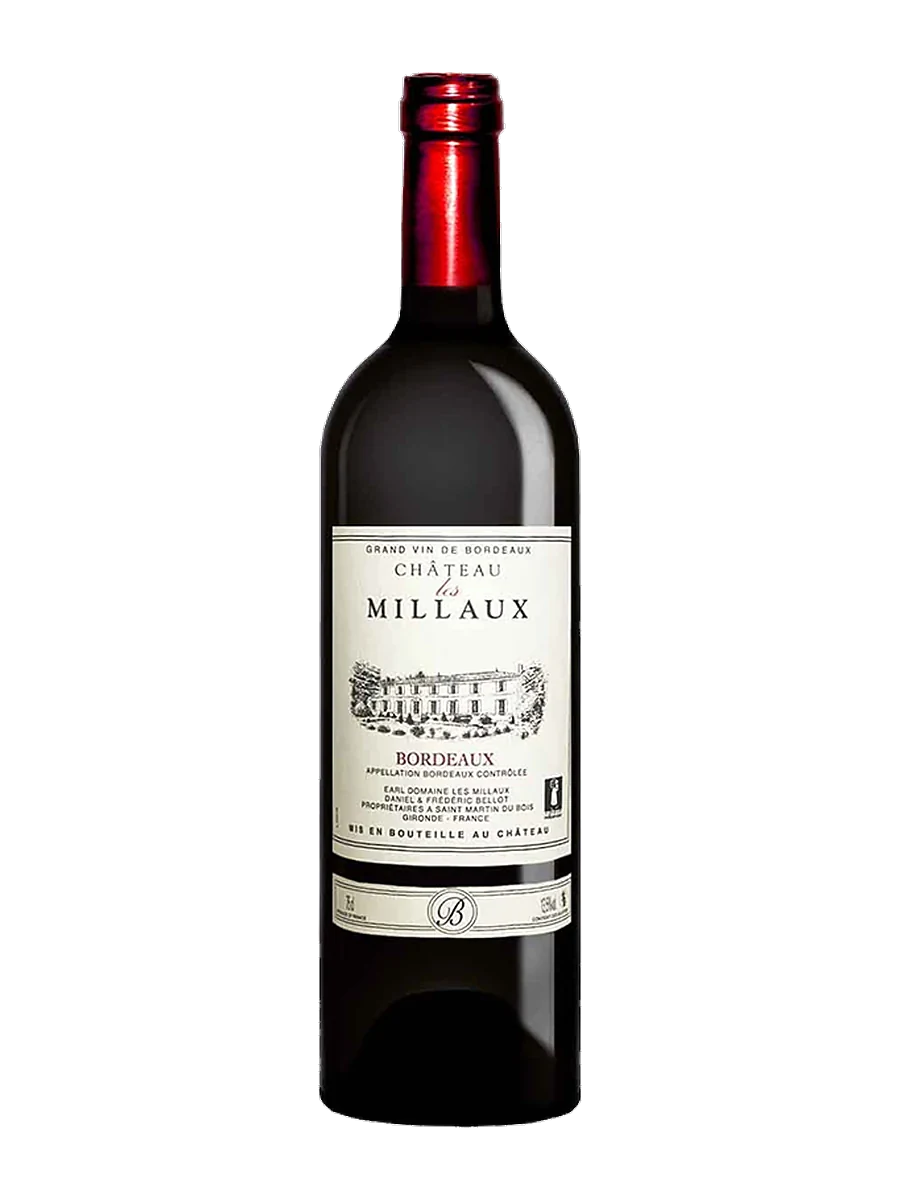
Vintage2020
Price540.000 ₫
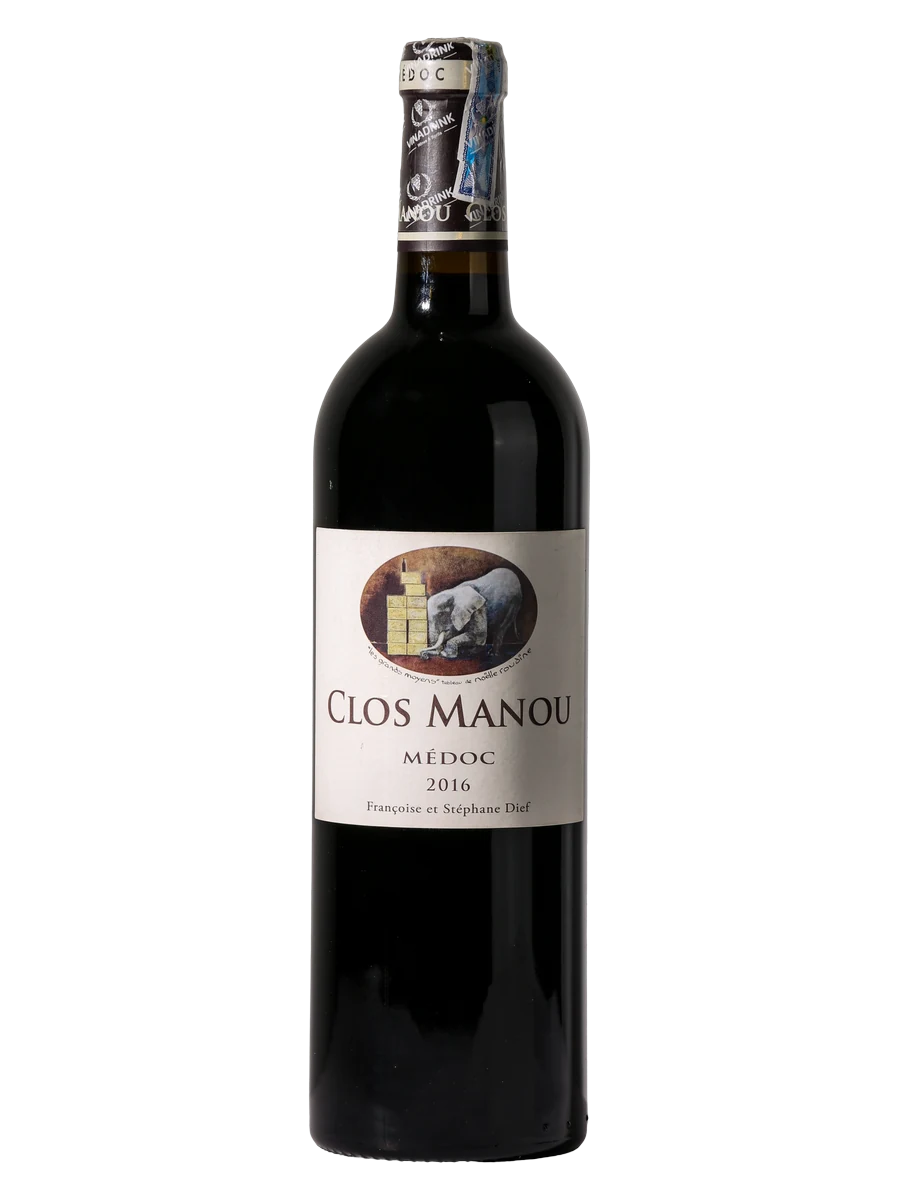
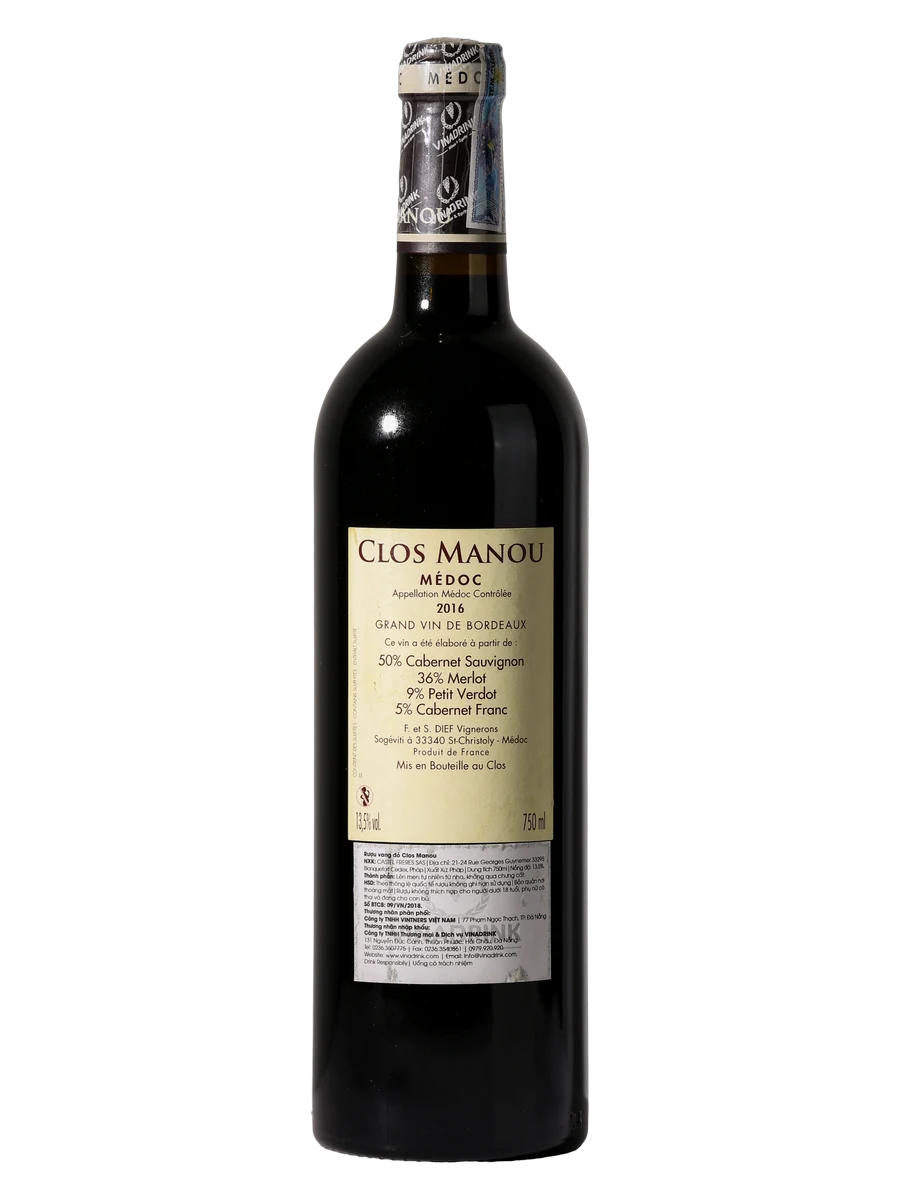
Clos Manou 2016 is the grand vin of the Dief family estate in Saint-Christoly-Médoc, a blend of 50% Cabernet Sauvignon, 36% Merlot, 9% Petit Verdot and 5% Cabernet Franc. The grapes are hand-harvested, sorted twice, and
Product intended for persons aged 18 and over. Drinking alcohol and beer is harmful to your health. Product information is objectively descriptive in nature.

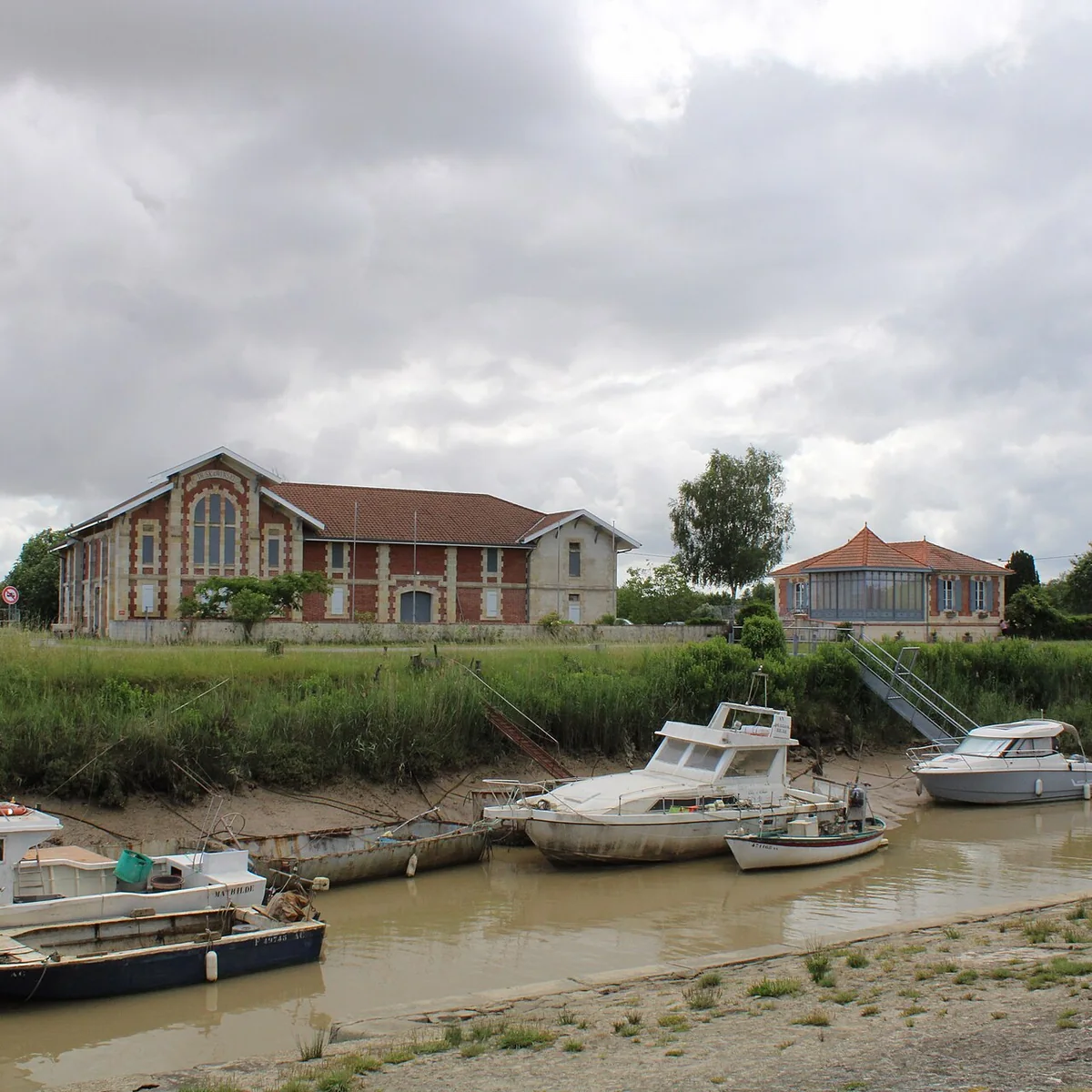 Image: René Hourdry / Wikimedia Commons · CC BY-SA 4.0
Clos Manou 2016 is the grand vin of the Dief family estate in Saint-Christoly-Médoc, a blend of 50% Cabernet Sauvignon, 36% Merlot, 9% Petit Verdot and 5% Cabernet Franc. The grapes are hand-harvested, sorted twice, and fermented in wooden and concrete vats. The wine was aged on fine lees for 17 months – 70% new French oak barrels, 20% one-year-old barrels, 10% 7 hl concrete eggs – then bottled at the estate, without fining.
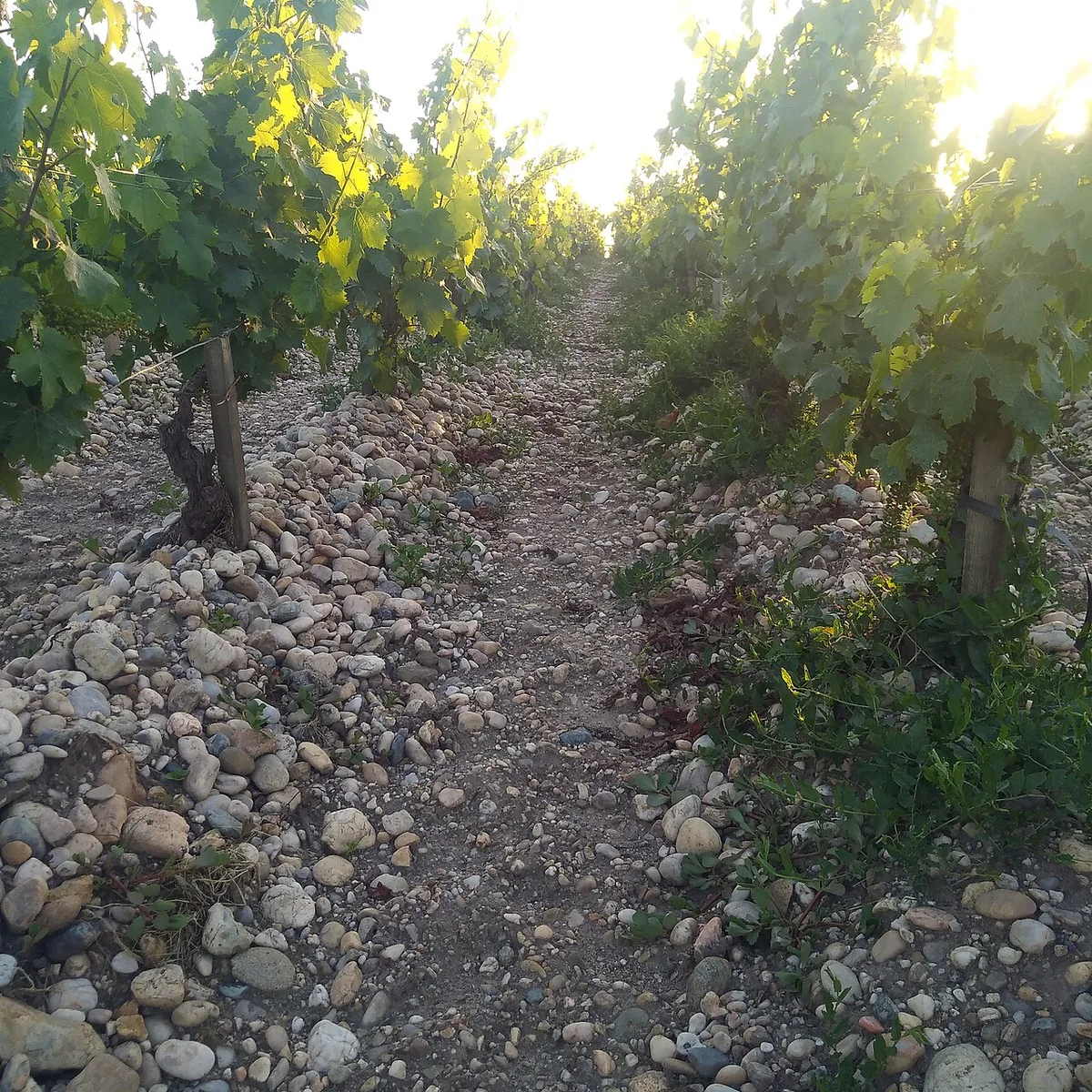 Image: Remi Mathis / Wikimedia Commons · CC BY-SA 4.0
A deep violet-red, almost opaque, with a mulberry rim. The nose opens with smoky blackcurrant, liquorice, espresso, graphite and cedar, with a touch of black pepper. The palate is medium to full-bodied, with powdery-fine yet firm tannins and fresh acidity keeping the rhythm; the finish is long, with cigar leaf, sweet spice and a hint of black truffle.
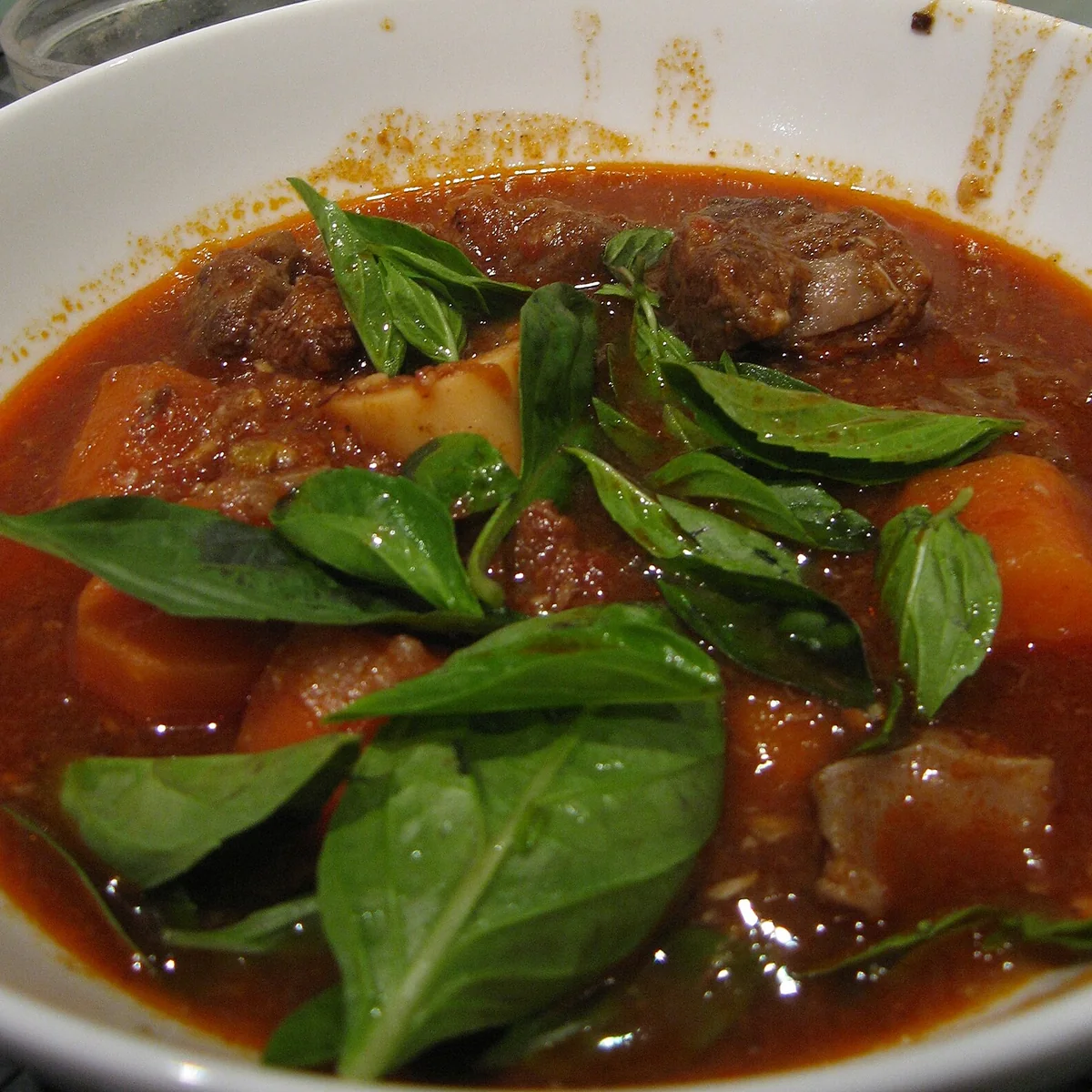 Image: Jason Hutchens / Wikimedia Commons · CC BY 2.0
Serve at 16–18 °C in a wide-bowled Bordeaux glass; decant for 1–2 hours to let the tannins relax and the smoky and liquorice aromas unfold. William Kelley (Wine Advocate) sets the drinking window at 2025–2040, so the bottle is now entering its maturity while still able to be cellared for a long time. It pairs well with grilled lamb chops, beef tenderloin steak and aged hard cheeses; among Vietnamese dishes, bò kho (Vietnamese beef stew) or grilled beef in betel leaves (bò nướng lá lốt) are natural choices.
Dry; medium+ to high acidity; high tannin; full body.
Steak, Vietnamese shaking beef (bò lúc lắc), grilled lamb chops, sizzling beef steak (bò né); hard cheeses (cheddar, aged gouda).
Thick skins and many seeds → deep colour, firm tannins, ageing potential of 10–30+ years. Late ripening, so it needs a long sunny season. The most widely planted wine grape in the world.
Scores of 0–10 and the 1–5 scale are a profile for reference of the Cabernet Sauvignon variety (France – Left Bank Bordeaux (Médoc, Pauillac, Margaux) – blend, Cab-dominant (red)), converted from published residual sugar, acidity, tannin and alcohol data — according to the KIDO Wine Flavour Guide; not a separate measurement of this bottle.
Clos Manou began in 1998 with 600 bottles made in the garage of Françoise and Stéphane Dief in Saint-Christoly-Médoc, in the north of the Médoc peninsula. The estate makes only two labels: Clos Manou is the grand vin, while Petit Manou is the second wine, Merlot-leaning and aged in used barrels. The 2016 vintage was produced when the estate had 16.5 ha, with an expected output of around 55,000 bottles, in a year that Jeb Dunnuck called a "rock star" vintage for Bordeaux.
The vineyard spreads across the two communes of Saint-Christoly and Couquèques, with three soil types: 40% clay-limestone, 30% gravel mixed with clay and 30% gravel mixed with sand; planting density is 9,000–10,000 vines/ha, with an average vine age of about 40 years. The soil is ploughed under the vine rows, grass is kept between the rows, leaf removal is done by hand, no anti-botrytis treatments are used, and mating-disruption pheromones are used to control grape moths. In 2016, Merlot and Cabernet Franc were hand-picked from 6 to 14 October, and Cabernet Sauvignon and Petit Verdot from 17 to 21 October, with yields of around 50 hl/ha. The grapes were sorted twice around destemming, cold-soaked at 8–10 °C for 48–72 hours, and fermented with pump-overs in concrete vats and hand punch-downs in wooden vats. The wine underwent malolactic fermentation in barrel and vat, was aged on lees with stirring for 17 months (70% new French oak barrels, 20% one-year-old barrels, 10% 7 hl concrete eggs), and was then bottled at the estate after 19–20 months, unfined and only lightly filtered.
According to Jeb Dunnuck, the wine shows blackcurrant, graphite, spice and cedar pencil shavings in a classic Médoc style, balanced and elegant. Jane Anson (Inside Bordeaux) highlights liquorice, espresso, blackcurrant and wild blueberry along with campfire smoke, rich yet polished. William Kelley (Wine Advocate) finds additional cigar leaf, forest floor and black truffle on a medium to full-bodied frame, with refined tannins and lively acidity. Tasting again in 2024, Chris Kissack (The Wine Doctor) described a nearly opaque dark colour, a nose of smoky blackcurrant, black beans and black pepper, and a silky palate with dry, powdery tannins – a bottle still brooding that needs more time.
As for the scores of the 2016 vintage: Jane Anson gave 94/100 (2021), Chris Kissack 93/100 (2024), Jeb Dunnuck 92/100 (2019), William Kelley 92/100 (2022) and Jeff Leve (The Wine Cellar Insider) 91/100 (2022); Vert de Vin gave 94/100 when tasted in January 2019. While the wine was still in barrel, James Suckling scored it 92–93 and Antonio Galloni (Vinous) 87–90. On Vivino, the 2016 vintage holds 4.1/5 from 395 ratings.
The wine suits a temperature of 16–18 °C, a Bordeaux glass and a 1–2 hour decant. The Cabernet structure and new-oak layer go well with grilled or braised red meats: lamb chops, beef tenderloin, roast duck; at a Vietnamese table, bò kho or grilled beef in betel leaves is rich enough to stand alongside the tannins, while aged hard cheese suits the end of the meal.
The drinking windows given are fairly broad: Jeb Dunnuck 2019–2034, Jane Anson 2021–2038, William Kelley 2025–2040; in August 2024, Kissack even advised holding it for another four to five years. The bottle should be stored horizontally in a dark, cool place with a stable temperature. The 2016 vintage was bottled before the estate switched almost its entire production to Ardeaseal closures from the 2018 vintage.
A "cult" Médoc, rich and polished yet never losing its heart ("has concentration and polish but never loses its sense of heart") — Jane Anson, Inside Bordeaux, 2021
Dark, brooding, still closed and seriously structured – a bottle that needs more time in the cellar — Chris Kissack, The Wine Doctor, 2024
Beautifully balanced, clean, elegant and rich, it can be enjoyed for over 15 years — Jeb Dunnuck, 2019
Content compiled from producers and professional review sites, objectively descriptive in nature; scores and awards are as per the cited sources.